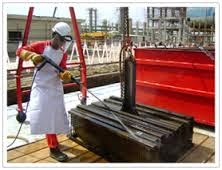
Showing posts with label Chemical cleaning. Show all posts

Sunday, 17 May 2015

Natural Cleaning Solutions for Hardwood Floors

It's almost impossible to research natural cleaning solutions without coming across baking soda and/or vinegar as recommended solutions.

For a change, we promise not to offer baking soda or vinegar as natural floor cleaning solutions for sealed hardwood floors. Although these ingredients dominate the search results, they're worthless at best and potentially harmful as finished floor cleaners.

What we do offer are simple, common sense solutions and products for organic or non toxic floor cleaners.

Reasons for Using Natural Hardwood Floor Cleaners

Safe for Pets and Children
Families with children, especially those young enough to play on the floor, may want to avoid harsh chemical floor cleaners so their children aren't exposed to harmful fumes and residue.

Reactions to Strong Chemicals
Some people have very sensitive skin and allergies that limit their ability to be around potent odors or caustic chemicals that are often found in commercial floor cleaning products.

Sealed or Finished Hardwood Floor Cleaners
Finished or sealed hardwood floors have a coating of polyurethane or a similar clear protective finish.
As the Saying Goes, "An Once of Prevention..."

Personally we always felt awkward at homes where we had to take our shoes off upon entering. But you know what? They might be on to something.

Not only is this preventative measure good at keeping carpets fresh, but shoes track dirt onto hardwood floors and then grind the particles against the wood with their hard soles. Obviously this is not good for the finish.

But whether or not you insist visitors take off their shoes, at least performing regular vacuuming or damp mopping on the floor to pick up particles will remove these tiny pieces of grit that act as sandpaper against the finish.

What's Wrong with Baking Soda and Vinegar?
Any search of natural or organic or non-toxic floor cleaning solutions is bound to return a lot of results suggesting baking soda and vinegar, sometimes mixed together. These can be effective cleaning agents in some situations but they're not the right the answer for cleaning hardwood floors.
The first problem with these compounds is that they are mildly corrosive. Baking soda is mildly alkaline which means it has an above average pH level and vinegar is mildly acidic with a below average pH level.

And as far as the advice to mix them baking soda and vinegar goes, this makes little sense. When you mix an acid and a base together they neutralize each other in an fizzy yet worthless mess.
It might make sense to use these ingredients to scrub your tiles, shower stalls, windows, countertops or grout, but don't bother mixing baking soda and vinegar together. And don't put them on your hardwood floor, either alone or together.

Good Cleaners, Wrong Application
The same is true with cleaners offering wax-based finishes or those that contain ammonia. These cleaners can cloud the nice shiny finish of a hardwood floor

These types of floor cleaners are appropriate for tile, vinyl or laminate floors, but they're not right for use on finished hardwood.

Natural Organic and Non-Toxic Cleaning Solutions for Sealed Hardwood Floors

Use Dishwashing Soap
So what are good mild cleaning solutions that won't harm your hardwood floor? Actually the dish soap you use in the kitchen sink can be mixed with water for a safe mild mopping solution that won't harm or dull the finish.

There is a company called Method that makes non-toxic, biodegradable soaps including dish soaps, laundry cleaners and a wood floor cleaning product.
Biokleen is another company making natural cleaning products. Their Citrus Essence Bac-Out Multi-Surface Floor Cleaner is safe for sealed hardwood floors. Their products are concentrated to reduce packaging and non-toxic to be safe for people and the environment.
Even big brand Clorox has a line called Clorox Green Works has a neutral flor cleaner which is pH neutral and 99% natural made primarily of mineral and plant-based ingredients.

A company called Bona also offers non-toxic floor cleaning products. Considering what a growing market green products are there are sure to be other lesser known, regional and upcoming products entering the market all the time

Trewax also offers a pet safe, no fragrance, all natural and pH neutral sealed floor cleaner.
A Word About Wood and Water

The thing to be careful about when using water on wood is to not leave it on the floor for long. If you've ever kept a toothpick in your mouth for a long time you can understand the problem.
Even though the floor has a urethane finish, pooled water left on a finished floor for even a few minutes can leave a mark. This is why we use coasters under cool drinks sitting on a wood table.
Some people recommend only letting the mop get damp, but if you prefer to see soapy suds on the floor just be sure to wash a small area at a time and towel dry all the water completely before moving on to the next section to avoid leaving marks from any remaining droplets.

We recommend using an old bath-size towel for drying the floor to be sure the towel remains absorbent when cleaning a large area.

Steam Mops and Steam Cleaners Are Safe on Sealed Floors
While excessive water on a hardwood floor is bad, using steam mops and steam cleaners are actually quite safe.

Plus steam cleaners and steam mops don't require any additional products at all so they're a great way to safely clean floor with no chemicals, fragrances or residue.

By using only heat and water vapor your floors and your home will be left clean and safe your children, family, pets and the environment.

Looking for Singapore chemical cleaning services? Visit us today over here.An article by Dougles Chan - Search Engine Guru - One of the best SEO companies in Singapore and globally. Contact Dougles Chan @ +(65) 9388 0851 or email to dc@dougleschan.com for more information on how to make your website to be the top in Google.

Friday, 15 May 2015

Cleaning Green

The cleaning products we buy at the local grocery store usually contain strong chemicals that cause side effects such as eye and lung irritation. The same chemicals that allow us to easily spray and wipe away grime, remain in our environment long after we've rinsed them away. Since many people have become chemically sensitive, it becomes even more of a puzzle to find a cleaning product that works well, but is non irritating.

For a solution, we need to go back to the future. The truth is that almost any dirty surface in your home can be cleaned with one or a combination of the following:

Water Water is a natural solvent--think of the Grand Canyon. We just aren't patient enough to allow it to do its job. Saturate a dirty surface with water and leave it. Then come back and scrub. More than likely it will be clean.

Castile Soap Castile soap has been around since the sixteenth century. While most soaps are made from animal fat, castile soap is made from vegetable oil. It's commonly used as a body soap because of its gentleness, but this versatile cleanser has been used as a toothpaste, shampoo, and laundry detergent. How's that for versatility? Mixed with baking soda it makes a wonderful creamy cleanser for tubs, toilets, etc. For those of you addicted to your fruit-flavored bath bombs, not to worry. Castile soap comes in a smorgasbord of of varieties--peppermint, spearment, tea tree, etc.

Baking Soda (bicarbonate of soda) You probably already know baking soda is great for absorbing odors in the refrigerator. As a cleanser, its abrasive texture makes it great for scouring surfaces. For burnt-on food in the bottom of cooking pans, sprinkle some baking soda, then add hot water. Let it soak overnight, and the burnt-on food will wash off much more easily. To keep drains clear, pour in some baking soda then vinegar and cover the drain. The chemical reaction will help dissolve crud that would otherwise clog the drain, not to mention keeping down odors.

Vinegar Vinegar is a powerful cleaner--especially for any mess that involves grease. Keep a spray bottle with a 50/50 mix of white vinegar and water to clean glass surfaces. A quarter cup of vinegar with cool soapy water is great for cleaning stove tops and ovens. Spray on and let it set for a few minutes then wipe clean. This same mixture will clean greasy kitchen cabinets.

One added bonus is the advent of microfiber technology. Microfiber cleaning cloths are fabulous at grabbing and trapping dust, dirt, and debris without scratching surfaces.

With so many people on the planet, the chemical soup of cleaning products that leach into the water is an enormous problem. It's important to use multi-use products. They require less packaging, less transport, and cause less damage to the environment.

Search for Singapore chemical cleaning services? Visit us today over this URL.A marketing article by Dougles Chan - Search Engine Guru - Best SEO companies in Singapore and globally. Contact Dougles Chan @ +(65) 9388 0851 or email to dc@dougleschan.com for more information on how to make your website to be the top in Google.

Wednesday, 13 May 2015

Carpet Dry Cleaning or Carpet Steam Cleaning: Which Is Better?

A carpet can be considered an investment for both residential housing and commercial buildings. But as time passes by, it becomes dirty due to attached dirt, stains and fibres caused by natural everyday occurrences and constant visitors at home or in the workplace. The best way to remove every sign of rubbish is to clean it. There are two effective ways in doing this task: either by carpet dry cleaning or carpet steam cleaning. How do these two techniques of carpet cleaning differ from each other?

Dry Cleaning
This often utilizes chemical compounds to get rid off dirt from the carpet. This carpet cleaning method is beneficial to both home and business owners because it requires a small amount of water and moisture which leads to faster drying. Some techniques that dry cleaners use are scrubbing and encapsulation. Carpet dry cleaners scrub the dirt from the carpet to a dry compound and then suck the dirt up by vacuuming. While encapsulation is performed by spreading a special compound to the carpet and wait for it to encapsulate the dirt. When it comes to drying, carpets that undergo this traditional cleaning method usually take a few hours to dry.

Steam Cleaning
This is the best choice for those who want their carpets to be cleaned deeply. This carpet cleaning technique combines hot water with chemical cleaning solutions that are expected to shatter dirt particles and remove them from the carpet. A machine that functions like a vacuum cleaner is often used to suck out dirt from carpet strands. When it comes to drying, this cleaning method usually takes a few days for the carpet to totally dry up. This is the main drawback of using this method. It creates inconvenience to carpet owners because of the longer drying time.

So which is the better carpet cleaning method? From the facts presented above, it can be concluded that carpet dry cleaning is the better choice for home and business owners who want their carpets cleaned. Why is this so? This method allows carpets to dry in just a matter of hours as compared to a few days of the steam cleaning. The time it takes for a carpet to dry up is very important because it has effect to the quality of the carpet. The longer it remains wet, the higher the possibility for it to become sticky. It can also grow mildew and carpets can easily get dirty and stained again.

Looking for chemical cleaning services? Visit us today over this URL.A marketing article by Dougles Chan - Search Engine Guru - Best SEO companies in Singapore and globally. Contact Dougles Chan @ +(65) 9388 0851 or email to dc@dougleschan.com for more information on how to make your website to be the top in Google.

Tuesday, 12 May 2015

How to Clean Your Air Ducts

Can you clean your own air ducts? The answer is yes! But, for the DIY'S there is some information you will need to know. There are several methods used to clean air ducts. Most of these methods require special equipment and training! So, there is only so much the DIY'S can do to clean their air ducts. It's more of a partial clean! Also, some air duct cleaning companies will use Biocides or Ozone to rid your ducts of contaminants. Biocides are chemicals that are used to rid your air ducts from bacteria and mold.

Ozone is a gas that is used to kill biological contaminants. Chemical biocides are regulated by the EPA under the Federal Pesticide Law. Any chemical can be dangerous, so do your research or hire a professional! Using chemicals without proper training is not recommended. Also, before cleaning your air ducts it's important to know what type of ducts your home or business has installed.

The most common type is flexible ducts and are typically insulated to conserve energy, reduce condensation and temperature control. Most metal duct work is used for industrial purposes and is typically more expensive. Air duct cleaning is much easier on metal air ducts than flexible ducts. Also, the insulation in flexible duct work is more likely to re-soil with dust and mold. You will need to clean more often. If you choose to clean air ducts yourself here are some tips.

1. Air ducts cannot be cleaned without tools! So, you will need a ladder, screwdriver (look at duct vents to determine), flashlight, wet/dry vacuum with long hose and soft bristle attachment. Also, you need to wear rubber gloves and face mask (respirator) for safety. You do not want to breathe the contaminants from your air ducts. Once you have the proper cleaning equipment then you must examine the ducts for contamination. First, run your finger along the inside of the ducts. If you see dust on your finger then your ducts are dirty. So, proper tools, training and contamination severity are the first thing you need to determine. Once this is complete you can move forward to the cleaning process.

2. First, remove the vent covers from the walls or ceilings. Be careful not to damage the vents or duct work when removing. If there is paint build-up on the vents you can use a putty knife (run around edges of vent) to remove without damage. Next, you need to set-up your vacuum system for cleaning. Most wet/dry vacuums come with several attachments. You want to use the long hose (attach directly to vacuum) and the hard plastic tube (attach to hose) with soft bristle brush to clean your vents.

Turn "on" the vacuum and begin the cleaning process. When cleaning the ducts make sure to clean with ease.....do not clean with force! Use just enough power to break the dust or mold away from the walls of the duct work. Use whatever cleaning pattern works best for you. Be sure to clean all the cracks and crevices (hard to reach places) so you can achieve the best results. You are only going to clean up into the vent so far with the length of hose. So, when there is no more hose to clean with you have gone as far into the duct work as your going to go. This process may take some time!

If you are going to use anti-bacterial solutions to disinfect (spray after the cleaning). Be sure to read the bottle for mixing instructions and "How to Use" on the label. After the ducts are cleaned then you need to clean the vents. A good cleaning solution is bleach and water. You can use the "Rubber Stopper" in your kitchen sink (fill up sink to half) and then add 3 caps of bleach. Use warm or hot water. Let the vents soak for about an hour. Once the vents have soaked to remove debris then dry off and reinstall. Make sure the vents seal correctly around the edges. Next, you need to clean the wet/dry vacuum. Do not use the vacuum again until it's been cleaned!

Read your owner's manual for cleaning instructions. Also, you need to replace the air filters in your system. You can purchase good quality filters from most hardware stores. This process will achieve quality results if done properly.

Search for chemical cleaning services in Singapore? Visit us today over this URL.An article by Dougles Chan - Search Engine Guru - The best SEO company in Singapore and globally. Contact Dougles Chan @ +(65) 9388 0851 or email to dc@dougleschan.com for more information on how to make your website to be the top in Google.

Monday, 11 May 2015

Carpet Cleaning Methods - Chem-Dry Cleaning

There are several methods that can be adopted for cleaning carpets. Wet cleaning methods are, however, used more commonly. As a matter of fact, professional cleaning companies have recently come up with a technique that involves low moisture levels. This cleaning technique is known as dry-cleaning or chem-dry cleaning.

About Chem-dry cleaning
The chem-dry cleaning method is done with dry foam or dry chemicals. This technique usually works well on carpets used in high traffic areas, where wet cleaning might create a problem. Additionally, this technique is used specifically with deep cleaning.

It is a misconception that this technique does not involve water. However, little dampness is a part of the process.

The process is preceded by a pre-cleaning process wherein the carpet is cleaned for existing heavy soiling and grit with a pre-conditioner. Thereafter, the carpet is dusted with chemicals that are worked in by vigorous and repeated brushing using a brushing machine.

The carpet is then left to dry for about an hour, followed by deep vacuuming to extract the dirt suspended by chemical.

Benefits of Chem-dry cleaning
The chem-dry cleaning technique has many benefits associated with it. These include:

• Reduced drying time
As this carpet cleaning method uses less water, it hardly takes any time to dry the carpet. In fact, it is quite possible to walk over the carpet right after the cleaning process.

• Prevents over-wetting
Since the water is just sprinkled in little quantities, this cleaning technique prevents the carpet from getting too wet.

• No residue
With zero use of detergent and negligible amounts of water, this carpet cleaning technique does not leave behind any mold or residue. There is no risk of germ incubation, as no liquid is involved in the process.

• Completely organic and safe
Most professional carpet cleaning companies use chemicals that are completely organic. These chemicals are toxin-free and thus safe for pets and humans. Moreover, use of these cleaning agents doesn't affect people suffering from asthma and allergies.

Precautions
The chem-dry cleaning method is quite effective, as it provides deep cleansing of your carpet without making a mess or leaving behind residues. There are certain precautionary factors that should be considered during the process. Primarily, it is very important the technician is trained about the cleaning agent and equipment involved in the process.

Furthermore, the dry foam machine should be used with the flow or grain of the pile, if any. This might require turning the machine off and then going back to the initial edge to foam an adjoining area in flowing direction. Also, make sure the foam is completely dry before it is vacuumed. If the technician is not trained, desired results might not be achieved.

When hiring a professional cleaning company, make sure to ask about the cleaning agent used in the process. It is very important to use agents that are non-toxic and completely organic for an eco-friendly carpet cleaning approach.

Seeking for chemical cleaning services? Visit us today over this URL.An article by Dougles Chan - Search Engine Guru - The best SEO company in Singapore and globally. Contact Dougles Chan @ +(65) 9388 0851 or email to dc@dougleschan.com for more information on how to make your website to be the top in Google.

Tuesday, 14 April 2015

Top 5 Non-Chemical Cleaning Tools You Can Use

http://www.heatecholdings.com/
 It seems that every day you learn more and more just how dangerous and polluting cleaning solutions can be. There's more to these products than just their price tag too. These chemical based products cost you environmental pollution and long term health concerns such as asthma, allergies, bronchitis and sinusitis. Consumers are more educated now causing a growth in non-toxic products that promote environmental responsibility and a healthier lifestyle. There are a few companies that have really taken over the 'green' industry, saving you from making homemade solutions with vinegar and baking soda.
1. Seventh Generation-for 20 years their mission has been to protect you and the world naturally and effectively. They have been around the block a few times and have a product list to prove it. For disinfectants, Seventh Generation has a multi-surface cleaner, bathroom cleaner and wipes. They boast a long list of household cleaners including shower, tub and tile, carpet spot and stain, glass, toilet bowl and an all-purpose cleaner. Laundry products include concentrated and baby detergents and fabric softener. They also carry a variety of dishwashing products, household paper and supplies and feminine care products. They have been there for us for 20 years and are a name you can trust.
2. Green Works-their goal was to set a new healthy standard for cleaning products; to create a product not tested on animals, biodegradable and yet tough enough to work. Green Works offers all natural cleaners like toilet bowl cleaner, multi-surface cleaner, glass cleaner, toilet bowl cleaner, dishwashing liquid and some great cleaning wipes. In addition to this they have laundry detergent for you and a stain remover. To top it off, their bottles are pretty enough to make you smile while you clean.
3. Simple Green-this company originated over 30 years ago before environmentally friendly products gained their popularity. They spent three years perfecting a non-toxic, non-abrasive, biodegradable product. Simple Green is one of the few earth friendly cat-odor cleaners on the market and also offer all-purpose cleaner, motorsports cleaner and degreaser, steel and chrome cleaner, marble cleaner, deck and fence cleaner, house and siding cleaner, concrete and driveway cleaner, BBQ and grill cleaner, bike cleaner and lime scum cleaner and then of course they display a list of your everyday household cleaners. They cover the areas in cleaning that other companies haven't gotten to quite yet.
4. Nature's Source Cleaners-these are simple, plant-based cleaners that are biodegradable and natural. They offer five outstanding products with natural ingredients of brands you have already known through the years. Their Shout laundry stain remover is a natural stain remover using simple ingredients to tackle tough stains. A 'green' version of Windex leaves "nothing behind, but the shine" and their bathroom cleaner is a plant-based cleaner from the original makers of Scrubbing Bubbles and removes soap scum with the same power. Nature's Source cleaners offers an all purpose cleaner to naturally tackle grease and grime and a tough toilet-bowl cleaner that will remove your hard water deposits from the makers of Scrubbing Bubbles.
5. Grab Green-designed by a mom to create a solution to remove laundry stains from her children's clothes. Well the hard work paid off and Grab Green offers 3-in-1 laundry detergent, delicate, bleach alternative, wet dryer sheets, linen sprays, dishwashing detergent, glass cleaner, degreaser and an all purpose cleaner. This sure was a busy mom!
This world is not only your world but it is the future world of your children. Make it a healthy one.
Click here to know for safe Chemical Cleaning.

Tuesday, 7 April 2015

Chemical Cleaning Facts - All Those Chemicals Don't Do That Much Harm, Do They?

Do you want to know the cleaning facts that are not widely publicised? If you’ve ever read the ingredients on the labels of your household cleaners, you’d know that they contain a number of different chemicals. You’re also probably aware that these chemicals have a distinct smell or odour. This article is intended to tell you what you probably don’t know. All the cleaning facts in this article have a direct affect on you and it should be your right to know them.
Our cleaning facts research states that there are over 75,000 chemicals licensed for commercial use in today’s world, with about 2000 new synthetic chemicals licensed each year. A large number of these chemicals are suspected carcinogens or are thought to cause a number of health problems. It may surprise you to know that only 600 of these chemicals have been adequately tested. Commercial cleaning product companies are under no legal obligation to research how their products might harm human health. What’s more, only 1% of toxins are required to be listed on the product label. This is because companies classify their ingredients as ‘trade secrets’. -Lorie Dwornick, researcher, educator and activist, 2002
Want more cleaning facts? According to the Federal Environmental Protection Agency, chemical levels in the home are up to 70 times higher than outside. It has been proven that air quality inside the average American household is 2 to 5 times more contaminated than the outside air. This is due largely to the chemicals found in commercial products such as cosmetics and cleaning products. In 1985, research by the EPA concluded that chemicals in household cleaners are about 3 times more likely to cause cancer than any other air pollutant. Did you know that in the early 1900’s, only 1 in every 8,000 Americans developed cancer. This ratio has dropped to 1 in every 3 today!
Our cleaning facts research has also alerted us to the dangers concerning our children. Over a million Americans are treated for exposure to household cleaning products. The majority of these are children under the age of 12. When you take into account the weight difference between that of a child and that of an adult, the amount of air, food and water consumed by a child is far greater than that of an adult. This means that they are exposed more to pollutants than adults. A child’s immune system is also less developed and their developing cells are more easily damaged. Pollutants in the air tend to be more concentrated towards ground level. Children breathe air which contains more pollutants simply because of their height. They also tend to spend more time playing on the floor and in contact with cleaning product residues. Those chemicals which are tested are only tested for adults. Children are not considered. Does this sound worrying? What affect is our chemical lifestyle having on our children’s health?
The chemical industry claims that very low levels of exposure to these chemicals are safe, yet there have been no exposure studies completed for the large majority of these chemicals. There is also limited information as to how these chemicals interact with each other. According to the EPA, combined chemicals are far more dangerous. Did you know that mixing Ammonia with bleach results in a toxic gas extremely lethal to humans? If you also check the ingredients of many household cleaners you will find that they often contain both ammonia and bleach.
If you remember any of these cleaning facts, remember this. Petrochemical cleaning products are absorbed easily through our skin. The chemicals travel through our blood stream and are stored in our fatty tissues. Over time, the build up of these toxic chemicals causes many health problems, including cancer and Alzheimer’s disease. All this can be avoided with the use of ‘green’ products which contain no toxic chemicals and are much safer for the environment. You should also be aware that all the chemicals that you wash down your drains will inevitably end up in our rivers. The water in our rivers is put through a water treatment plant where it is mixed with even more toxic chemicals. It is then returned to us in our taps. Everything that we do to the environment we also do to ourselves!
5 interesting cleaning facts
Cleaning Fact 1: Cold water will inhibit the spread of bacteria and germs. Hot water only encourages the growth of nasty organisms.
Cleaning Fact 2: Antibacterial soaps are really not necessary in the home and may do more harm than good.
Cleaning Fact 3: Commercial dish washing detergents often leave chemical residues on your dishes that accumulate each time you wash them. Those chemicals are absorbed into your food.
Cleaning Fact 4: If a chemical kills half of a group of test animals it is labeled toxic. If the lab animals survives after being exposed to an amount greater than that listed it is labeled non-toxic. These tests are not specific to humans and do not consider long term exposure. (Lab animals often include mice which have a stronger immune system than humans.)
Cleaning Fact 5: Women who work at home are at a 54% greater risk of developing cancer than women who work away from home. A 15 year study concluded that this is a direct result of the chemicals in household products.
Check out for more information on Chemical cleaning.

Wednesday, 1 April 2015

Chemical Cleaning - Methods and Applications

Chemical cleaning is a method relevant in freeing walls and surfaces of various equipment, heat exchangers, pipelines, vessels and kettles from unwanted residues and bacterial contaminants. It is also essential in water purification, treatment, disinfection and conditioning. With varying methods to its name, several industries benefit from the procedure.

The most important facets of chemical cleaning gear on providing environment-friendly alternatives to consumers. No matter where it is applied, the aim is to primarily free the surface from contaminants. Below are the different methods listed under this cleaning process.

Chlorine dioxide method

Biofilms and legionella are two of the most common microbes that reside in water. Biofilms are residences or havens for organisms that contaminate products in water solutions. Legionnaires disease is caused by legionella or a Gram negative bacterium.

http://www.heatecholdings.com/


With the aid of chlorine dioxide, the biofilm or legionella may be removed from the water system. It is a favored technique because it has the capacity to prevent future formation of contaminants plus it can also be used in both hot and cold water systems. Chlorine is proven to have a safer solubility in water and has the capability to destroy THM precursors. It also increases coagulation while it destroys phenols. It is not hazardous to health and does not have any distinct smell.

Ultraviolet radiation

Another proven chemical cleaning process for water disinfection is the ultraviolet or UV radiation. Aside from water, it may also disinfect air and solid surfaces contaminated by microbes. Its capacity to disinfect was reported since biology and light waves were introduced in the fields of science research.

Ultraviolet radiation has several advantages. It is considered safe because there is no need to monitor any dangerous chemicals thus the results of disinfection are quickly attained. Any household or business establishment does not need to spend a lot since the initial system and operating costs are very minimal. It does not change the taste and smell of water as well plus they are easily installed and maintained.

Ozone purification

Ozone is one  molecule that contains three atoms of oxygen and is naturally produced by a series of chemical reactions. It may come from the ultraviolet rays of the sun as well as from waterfalls and thunderstorms. It is also a chemical cleaning process used in wide areas of water treatment and purification. It is used in potable water treatments and in the broader municipal wastewater sites. It is also being widely recognized in several industries.

Tuesday, 10 March 2015

Chemical Cleaning of Shell Tube Heat Exchanger


HOUSTON, TX - The Ethyl Corporation, Houston facility, recently contracted with CleanCo Systems Industrial Service Company to perform Chemical Cleaning on two of the facilities fixed shell tube heat exchangers. Tim Green, General Manager of CleanCo Systems and project supervisor explains, "The fixed tube exchanger presents a challenge for cleaning the shell side of the exchanger. The tubes are permanently welded in the shell or casing and in order to clean the surfaces of contaminates, fouling and oil or grease we utilize our chemical cleaning system and specialized equipment."

The equipment used for this project is a trailer mounted, closed loop pumping system driven by a 400 HP diesel engine and a circulating pump along with two each 250 gallon stainless steel tanks. The flow rate of the system is adjustable to up to 2000 GPM. "We utilize our own chemists and digital lab devices to determine the proper chemicals to use. We determine what form -- foam, liquid, cascading, or circulation -- as well as how strong the cleaning solution must be. No guesswork. No "one chemical fits all". We'll determine what will work -- and then go to work," Green continued.

After the chemical cleaning process, the exchangers were repositioned to the tube lancing area of CleanCo's Off-Site Heat Exchanger Cleaning Facility. A multi-tube lancing system is used with five tubes simultaneously cleaned with 10,000 psi of water knocking out all fouling and contaminates on the inside of the tubes. The facility has a state of the art water recycling system that significantly reduces water usage and the waste stream generated with this type of cleaning.

Once the exchangers were completely cleaned, CleanCo performed Eddie Current Testing and Inspection of the tubes to determine metal condition and wear prior to being placed back into operations. CleanCo Systems also provides exchanger repair and tube refits but in the case of the Ethyl exchangers, the inspections indicated they had plenty of life left in them and went right back to the plant and back into operations.

For all of your Heat Exchanger, Hydroblasting, Chemical Cleaning, Vacuum Truck Services and Hydro-Excavating needs, call CleanCo Systems at 713-304-4148 or click http://www.cleancosystems.com.

Tuesday, 20 January 2015

Saving Energy Whilst Maintaining Temperature in the House

Thermal regulation inside houses means the control of temperature to make sure that the occupants do not feel uncomfortable with the level of heat and cold inside the house. Depending upon the structure of building to the appliances that should be brought to use, there are a few tips to maintain temperature in the house.

Building’s Structure:
Some buildings are just not made for efficiency when it comes to power bills. Some high buildings are notorious of costing their owners or occupants a fortune for cooling them down in summer season. Similarly, those buildings that have more basements down under face the issue of over humidity often times. Some buildings are unfit for use of central air conditioning and heating. Boilers are common and almost everyone is familiar with them and with how they work. Often times they heat things up so much that windows need to be opened or air cooler needs to be turned on for the sake of just breathing.

Buildings that have spacious rooms are easier to cool down in summer season and an air cooler can serve the purpose. On the contrary if there are smaller rooms, they get very hot and as a result they simply need air conditioning units to chill the rooms out. With this all said, new buildings must be made in a way that they give good value to the efforts made to control the temperatures.

Insulation and Cover:
In areas that are cold, walls made out of wood or concrete are the worst in terms of their efficiency to keep things warm inside. Likewise, in the summer season or in warmer regions they fail to keep the cooling inside. Builders are seen using things like wool for insulation of walls that disallow the heat to go outside through the walls. Similarly, windows and ventilators need to have heat insulating glass to keep external temperature at bay. In hotter areas, the same windows and vents need to be heat ray blocking thus preventing heat from outside to come in the room. Shades and covers on windows (better retractable) also help in keeping the inside of a house cool and comfortable. An air cooler suffices in case all other measures for keeping hot weather on the outside have been met.

HRV:
A heat recovery vent is a very useful piece of equipment that reuses the heat produced by the original source. The heat recovery vents recycle warmth inside a room by taking in the air, separating cool and warm air and then giving out the warm air to keep heat circulating. It also works the other way round and serves as an air cooler. It does this by replacing hot air in the inside with fresh and cool air from the outside. It does this by sucking in the air from outside and throwing it inside while the hotter inside air is to be given ventilation to move out. A cyclical process ensures that the room stays cool.

Air Conditioners:

Air conditioners become due in the brutal bombardment of sun when it becomes so hot that no air cooler remains effective. In harsh summer season, sometimes rooms becomes so hot that it feels as if one is sitting in a sauna or an oven, air conditioners or otherwise known as window units are best effective means for cooling the hottest of rooms down turning them into ice boxes. A worth buying air conditioner for conditions as severe as inferno; is 8000 BTU or beyond this in terms of capacity. The best suitable room type for such air chillers are those that are air tight.  

More air cooler options and alternatives, visit here.

Friday, 16 January 2015

Advantages and Disadvantages of Oil Coolers

Oil coolers perform the duty of removing surplus heat from oils, especially in vehicles that require constant performance. One of the major jobs of oil cooler is to ensure that the heat from the combustion engine does not overpower its performance. It also has to make sure that the heat does not fall below a certain level required for the car or vehicle to function. There are many other methods to cool down the atmosphere inside the car and people can employ the ones they like. Thus, there are many benefits and drawbacks to using oil coolers instead of other methods.

Oil cooler use oil instead of water to cool down the atmosphere and since the boiling point or temperature of oil is much higher than that of water, it can be used readily to cool things down. It will be able to perform its duties better due to this fact. Water usually boils at a hundred degrees but starts getting warmer much earlier. An oil cooler will stay cooler for a longer period of time. Some pressurized water coolers may be able to surpass the performance pelted out by oil coolers but that is usually much more expensive and costly.

Moreover, the problem with using water coolers is the fact that water is considered to be a conductor of electricity – and a very good one at that. If people use water coolers, there is a huge chance that some parts of the vehicle that work on electricity may come in contact with water and cause irreparable harm. To counter this, many people install separate coolers for the electric components in inside their appliances. An oil cooler, on the other hand, can be used to cool every single part of the equipment or appliance since it is an electricity insulator and can come in contact with electric components.

Another drawback to using water coolers is the amount of corrosion the cooler is likely to cause in the engine when it travels around. On the other hand, an oil cooler will actively work against corrosion and one will also not need to ensure that they regularly put oil on different components in the machine as oil will be running all over anyway. Thus, as opposed to water, oil is a much safer and better option. It will increase the working age of the vehicle and make it less rusty. Oil leaking in to parts will not cause much harm to anyone but water leakage may prove to be beyond deadly.

Since there are so many plus points to using oil coolers, there are many disadvantages as well. First up, it is not likely that the oil will cool anything over three hundred degrees because at that point, the oil will begin reaching its boiling point. Instead of making the individual parts in the equipment better, it will end up making the parts rusty and may leave behind ashy solids that can hamper the discourse of the vehicle. An oil cooler, therefore, is good up until a certain point. After that, it ceases to be anything extraordinary. It cannot work in every condition.


Lastly, oil coolers run with oil which can easily be degraded, become harmful to the parts in the vehicle and reduce the performance capability of the vehicle. On the other hand, water will not degrade – it may boil away or steam up but it will not become harmful to the vehicle itself. Also, oil may not conduct electricity but it is highly flammable; if the vehicle catches fire, it can prove to be very dangerous for the people travelling within because it can result in a huge blast. 

More marine services for oil coolers, click here.

Friday, 2 January 2015

How Ultrasonic Cleaning Works

By definition, ultrasonic cleaning refers to the complete and rapid removal of all contaminants from objects through the process of immersing them into a tank of liquid that is flooded with high frequency sound waves. A scrubbing action within the fluid itself is created by these sound waves that are non-audible. This particular process occurs through a high frequency electrical energy which is converted into sound waves of high frequency by a transducer. This is then known as ultrasonic energy. The transducer, being the core of the unit, is form where it derives its ability to clean the most difficult of substances from items. The transducer’s performance is from where the cleaning power of the unit stems.

The cleaning time as well as the efficacy achieved during the cleaning cycle both are affected by the efficiency of the transducer. More power is used by a transducer of poor quality and it also takes a longer time to clean the objects as compared to a transducer of good quality. This is the reason why it is wise that one should invest in a benchmark transducer so that they can benefit from a faster and more efficient cleaning unit.

The rapid formation as well as the collapse of minute bubbles is caused when the ultrasonic energy enters the liquid within the tank. This phenomenon is called cavitation. Before imploding against the surface of the item, the bubbles start to increase in size rapidly as they are immersed in the tank with a huge energy release that lifts all the contaminants off of the surface as well as the innermost recesses of parts that are intricately shaped.

Ultrasonic cleaning has become the first choice in industries all over for more than twenty five years due to its ability to clean hinges, box joints as well as threads both effectively and quickly. When cleaning items though, there are a lot of variables that need to be taken into account. These include time, frequency, heat, power and detergent type as they all have an effect on the cleaning process. However, the flexibility of ultrasonics can incorporate all of these into the process so as to achieve results that are the most effective.

When the cavitation occurs as the bubbles implode, the gaps that are left by the bubble are filled quickly by the cleaning solution. As the fluid comes into contact with the surface of the item, all the contaminants that are present are removed.

Sometimes people get confused as to whether to use spray washers or undertake ultrasonic cleaning. Aqueous spray washers are ideal for a great many cleaning applications. Stand alone basket washers and multistage conveyorised equipment both can often attain quick throughput as well as high standards of cleanliness. In a few cases, soils that are heavy are better dealt with spray washing because of the impact of the pumped cleaning solution through the wash jets.

In other instances though, ultrasonic cleaning and spray washing both might attain the standard of cleanliness that is required as well as the throughput requirements. This makes the choice dependent on either preference or cost.

Though there are applications in which ultrasonic cleaning units offer a clear cut advantage over the spray washers. Examples of such instances include:
  • Tubular components
  • Lightweight or delicate components that may be susceptible to damage
  • Components that may have deep or blind holes or other kinds of complex geometries


When achieving cleanliness standards that are measured in parts per billion or when achieving sub micron cleanliness standards then also ultrasonic cleaning is preferred over the use of spray washing. 

More Ultrasonic Cleaning services for marine sectors visit http://heatecholdings.com/

Saturday, 13 December 2014

Fresh water generator – Invention of the century

The earth is seventy percent water and though it may seem that there is water everywhere, only three percent of this water is fresh water and drinkable and the rest is all salty water which is not fit for drinking. Years ago, old cargo ships were required to carry huge supplies of fresh water for their crew when departing upon a long voyage. If there were a ship that would run out of water for drinking, it would be carrying a very miserable crew indeed. However, this has changed thanks to technology as in today’s era; almost all commercial ships are equipped with a fresh water generator. A fresh water generator is basically a kind of evaporator that converts salty sea water into water that is drinkable and fresh.

The whole idea behind a fresh water generator is actually quite simple. It serves the purpose of evaporating sea water with the use of a source of heat in order to separate the pure water from the salt, sediment and other elements. A diesel engine is usually used by fresh water generators as the heat source. However steam can also be used to serve the same purpose. Since fresh water generators often make use of existing heat in order to run, the cost of operation of these machines is quite low.

The fresh water generator has two main elements which are the heat exchanger and the condenser respectively. The heat exchanger serves the purpose of evaporating the water and the condenser condenses the fresh water vapor, turning it into water that is drinkable. The condenser is the element that cools down the vapor which is simply done by using cold sea water to cool the outside of the machine.

Fresh water generators should include a feature that can be used to monitor or check the salinity of the water that is processed. If the salinity were to exceed a particular level, which is usually between one and ten parts per million (ppm), the unit would automatically take the water back to the feed line so as to run it through the complete cycle again.

Fresh water generators these days are increasingly being used in desalination plants. These are usually and typically located in coastal areas and serve the purpose of providing the local community with fresh drinking water. They have become quite common in some communities of California as well as in the Middle East. As a response to drought as well as the concern over the availability of water in the growing number of cities, more and more desalination plants are likely to be built in the near future. 

One drawback though is that the costs that are involved in these desalination plants are quite high and so they are considered by communities only in those situations where they are faced with shortages of water from the sources that are traditional. So this poses a problem when the construction of desalination plants is given a thought as people only build them when needed.

In passenger and merchant ships, the application of fresh water generator becomes even more important and crucial. 

The ship based fresh water generator uses heat from ship’s engine and salt water from the sea and makes it drinkable through either evaporation method mentioned above or through the reverse osmosis process that is more expensive but produces bulk amount of drinkable water essential for drinking, washing and consumption of masses. All in all, the fresh water generator may end up preventing a world war by providing drinkable water made from all the water in the world thus eliminating the scarcity of this precious life source.  

Friday, 12 December 2014

Air Cooler – Why is it Important?


An air cooler is an important device that is used for cooling down surroundings in places that have a warm or hot climate in general. These have been used since quite a long period of time now and are excellent for combating heat on a day to day basis. Often compared a lot with air conditioners, people sometimes may even think that they are the same thing but in reality, they are entirely different from one another. These coolers are easy to purchase and are being used in countless homes in the world these days due to the fact that they provide high end cooling at all times.

Provision of Individual Cooling
One thing that makes the air cooler different from any other cooling device or equipment is the fact that it enables people to acquire individual cooling. This means that a person can achieve individual cooling, which is only and precisely for a single person only, without having to face any issues in the matter. Other cooling devices, most particularly air conditioners, do not provide this exclusive benefit. Instead, they offer overall cooling and this is something which has become rather common. Individual cooling is the best way for people to combat heat in summer for as long as they want.

Cost Effective
On the other hand, the air cooler is a highly efficient device that can be easily found within the market at affordable prices. This not only allows people to stay away from the heat at all times in the summer months, but it also allows them to save a massive amount of money in both the short as well as the long run. With air conditioners and other devices being costly, this proves to be rather cost efficient and something that will most definitely leave people feeling satisfied in the matter of stay cool in summers.

Wide Range of Types
There are many different types of an air cooler and these are all unique in their own way. Individuals can choose the one which they want, depending on their preferences in general. However, different types always tend to have different prices and this is something that all people should be aware of. Before buying, the quality is these coolers is also another thing that must be checked for sure as ensuring that tends to make them last for a long period of time. This is due to the fact that high quality coolers are undoubtedly much more durable than the low quality ones.

Swift Installation
The installation of the air cooler is another thing which people must not worry about because it is exceptionally easy to follow and maintain in the future. Due to their easy installation, which also takes very little time, these coolers have become the best way for cooling down places as well to achieve individual cooling in the hot months of summer. Mostly, the installation is taken care of by the company through which people purchase these coolers in the first place. However, the installation process being easy and swift surely does provide individuals with a high level of convenience.

Reduced Power Bills

Another very prominent thing to note about these coolers is the fact that they consume a very less amount of power in comparison with air conditioners, which are known for devouring massive amounts of power – resulting in increased electricity bills in both the short and the long run. With these coolers, power bills can be cut down by a long shot and it can stay that way forever, allowing people to save a lot more money than they ever have been able to. Since these coolers are undoubtedly very beneficial, acquiring them immediately has been highly recommended for everyone. 

More air cooler system at http://www.heatecholdings.com/